

Be prepared, be FireSmart
Be prepared, be FireSmart
Fire safety starts at home. Protect your family and your home with practical safety tips and FireSmart resources.
Prepare yourself and your family
Plan or participate in fire evacuation drills and learn how to use fire safety equipment.
One of the most important steps you can take to protect your family from fire is to create a home fire escape plan and practice it regularly. In an emergency, knowing exactly what to do can make the difference between life and death.
Use the steps below to build your plan—and practice home fire drills often so everyone is prepared.
- Draw a floor plan of your home. Sketch your home and mark two ways out of every room, especially sleeping areas. Make sure windows and doors can be opened easily. Review the escape routes with everyone in your household.
- Agree on a meeting place. Pick a clearly visible spot outside—such as a favourite tree, mailbox, or streetlight—where everyone will meet after escaping. This helps you quickly account for everyone and lets firefighters know if someone is still inside.
- Practice your plan. Hold a home fire drill at least twice a year. Assign one person as a monitor and make sure everyone participates. Remember: a fire drill is not a race. Leave quickly, but safely.
- Make drills realistic. Practice what to do if certain exits are blocked by fire. Try drills with the lights off or by pretending hallways are filled with smoke so everyone learns alternate escape routes.
- Check locks and exits. Make sure everyone can quickly unlock doors and windows—even in the dark. Doors or windows with security bars should have quick‑release devices, and everyone should know how to use them. If your home has more than one storey, make sure upper‑level rooms have a safe way to reach the ground, such as a fire‑resistant escape ladder.
- Plan for stairs. Make extra arrangements for children, older adults, and people with diverse abilities. Anyone who has difficulty moving should have a phone in their sleeping area and, if possible, sleep on the ground floor. In apartment buildings, use stairs only—never elevators. Elevators may stop working or open onto a fire‑affected floor.
- Test doors before opening. Before opening a door, kneel or crouch and use the back of your hand to check the door, the handle, and the space around the frame. If it feels warm, do not open it—use another escape route. If it feels cool, open the door slowly while bracing it with your shoulder. Be ready to close it quickly if smoke or flames appear.
- Crawl low under smoke. Smoke and heat rise, leaving cleaner air closer to the floor. If you encounter smoke, crawl on your hands and knees, keeping your head 12–24 inches (30–60 cm) above the floor. If your main exit is blocked, use an alternate route.
- Stop, Drop and Roll. If clothing catches fire: stop where you are, drop to the ground, cover your face, and roll until the flames are out. For burns, cool the area under cool running water for 10–15 minutes. If the burn blisters or chars, seek medical care immediately.
- Get out fast. Do not stop for belongings or pets. Go straight to your meeting place. Once safe, call the fire department from a neighbour’s phone or a mobile phone. Make sure everyone knows how to call emergency services.
- ...and stay out. Once you are outside, do not go back inside for any reason. Firefighters have the training and equipment to rescue people safely. Smoke and heat can quickly become deadly.
- Trapped? Close all doors between you and the fire. Stuff cracks around doors with cloth to keep smoke out. Go to a window and signal for help using a flashlight or light‑coloured cloth. If you have a phone, call the fire department and clearly report your location.
Community participation makes evacuation planning stronger. By joining evacuation drills when they’re offered by the Kelowna Fire Department, you help protect your household and support safer evacuations for the entire community.
Past drill in Magic Estates and Wilden
In October 2025, the Kelowna Fire Department and regional emergency partners conducted a live wildfire evacuation drill in the Wilden and Magic Estates neighbourhoods. Approximately 75 households gained hands‑on experience preparing to evacuate, travelling along pre‑identified routes, and assembling at a designated muster point. Using day-of evacuation drill data, including survey responses from participating residents, researchers from the National Research Council of Canada have prepared a report of their findings which will help improve future evacuation planning in Kelowna.
Knowing how to use a fire extinguisher can help you respond quickly and safely to a small fire—before it grows out of control.
This short video explains the basics of fire extinguisher use, including when it’s appropriate to use one and important safety tips to keep in mind. A few minutes of learning now can make a critical difference in an emergency.
Campfires and outdoor wood burning appliances are never allowed within city limits. Open burning requires a permit. Learn more about outdoor burning.
Kelowna beaches and parks are smoke-free. The Parks & Public Spaces Bylaw prohibits smoking in all Kelowna parks, including beaches, trails, playgrounds, sports fields and stadiums, and also prohibits the use of e-cigarettes and cannabis in parks and public spaces.
Make your home fire resistant
A home with a fire resistant roof and a FireSmart landscaping zone is 85% more likely to survive a wildfire. Learn how to FireSmart your home and yard with the interactive FireSmart Starts with You guide.
FireSmart your home
Your roof is the most vulnerable part of your house in a wildfire because of its large size and susceptibility to flying embers (firebrands). Choose a Class A or fire-resistant roof when replacing your roofing.
For more information on fire-resistant roofs, gutters, decks, windows, fences and more, explore these FireSmart Fact Sheets.
- Trim back branches that are hanging over your roof
- Clear pine needles and debris from roof, gutters and your home foundation.
- Prune trees at least two meters up from the ground. Take green waste to a local disposal site.
- Prune your shrubs, removing all dead branches.
- Keep your lawn mowed and watered, as fire moves quickly through dry grass and weeds
- Add a metre of landscape rock next to the foundation.
- Choose fire-resistant plants. Avoid and remove high risk trees like juniper, cedar, and mugo pine.
- Store firewood at least 10 metres from your house, especially during fire season
Learn more with the FireSmart BC Landscaping Guide
The FireSmart Community Chipping Program provides free curbside removal and chipping of highly flammable shrubs and branches each May. Book your pickup on a first‑come, first‑served basis. Registration opens late March to early April.
book curbside Pickup
Outdoor appliances and campfires
- Campfires, fire pits, and most wood‑burning appliances aren’t allowed in Kelowna.
- Check the rules, review the Fire and Life Safety Bylaw No. 10760.
Propane
- Never use propane inside your home unless the appliance is specifically certified for indoor use and properly vented.
- Propane is a safe and efficient fuel when used properly, but it requires careful handling and storage.
- Learn how to use, store, and transport propane safely: propane safety brochure.
Gasoline
- Gasoline is extremely flammable and should be handled with caution.
- Use gasoline only as a motor fuel, never as a cleaner or solvent.
- Store small amounts only, in approved containers, and outside the home.
Practice fire safety inside the home
From smoke alarms and batteries to kitchen safety and space heaters, there are plenty of fire dangers inside the home. Stay alert, be prepared.
Working smoke and carbon monoxide alarms save lives—but only if they’re properly installed and maintained.
- Install smoke alarms inside every bedroom, outside sleeping areas (such as hallways), and on every level of your home, including the basement.
- Test alarms at least once a month by pressing the test button to make sure they’re working.
- Replace smoke alarms every 10 years, or sooner if they don’t respond when tested.
Take a few minutes to check your alarms today—it’s one of the simplest and most effective ways to protect your household.
The kitchen is the leading place where home fires start—often because cooking is left unattended. A few simple habits can significantly reduce the risk of fire and burns.
- Never leave cooking unattended. If you need to leave the kitchen, turn off the heat.
- Turn pot and pan handles inward to prevent spills and burns.
- Wear short or close‑fitting sleeves to keep clothing from catching fire.
- Keep flammable items like curtains, paper towels, newspapers, and plastic bags away from burners and the oven.
- Keep a pot lid nearby to safely smother a small pan fire.
- When frying food, consider using a temperature‑controlled electric skillet or deep‑fat fryer.
Space Heaters
Portable space heaters are a leading cause of home fires if used incorrectly.
- Keep heaters at least three feet (one metre) away from anything that can burn.
- Never leave heaters on when you leave home or go to sleep. Keep children and pets well away.
- Choose a heater with an automatic shut‑off feature in case it tips over.
- Place heaters on a flat, level surface with clear space around them.
- Avoid plugging heaters into the same circuit as other high‑wattage appliances.
- Regularly check outlets, plugs, and cords for heat or damage, and replace frayed or loose cords immediately.
Tip: Never use a range or oven to heat your home.
Matches & Lighters
- Store matches and lighters up high and out of reach, preferably in a locked cabinet.
- Teach children to tell an adult if they find matches or lighters—and to never touch them.
Lithium‑ion batteries power everyday devices, but improper buying, charging, or disposal can quickly turn them into a serious fire hazard. Take these simple steps to reduce your risk:
- Buy smart: Choose batteries and devices from approved manufacturers with recognized safety certification marks (UL, ULC, or ETL).
- Charge safely: Charge batteries on hard, well‑ventilated surfaces—never on beds, couches, pillows, or blankets—and unplug them once fully charged.
- Recycle responsibly: Never put batteries or battery‑powered devices in the garbage or curbside recycling. Take them to a proper recycling depot to prevent fires and protect the environment.
Fire is not the only source of severe burns. Water, normally the firefighter’s friend, can also be a foe. Always be careful around fire, hot liquids and gases. To learn more about protecting children from burns and scalds visit burnfund.org.
- Use extension cords for temporary use only.
- Do not overload extension cords or run them under rugs or furniture.
- Replace cords that are cracked or frayed. If an appliance smokes or smells unusual, unplug it and have it repaired by a professional.
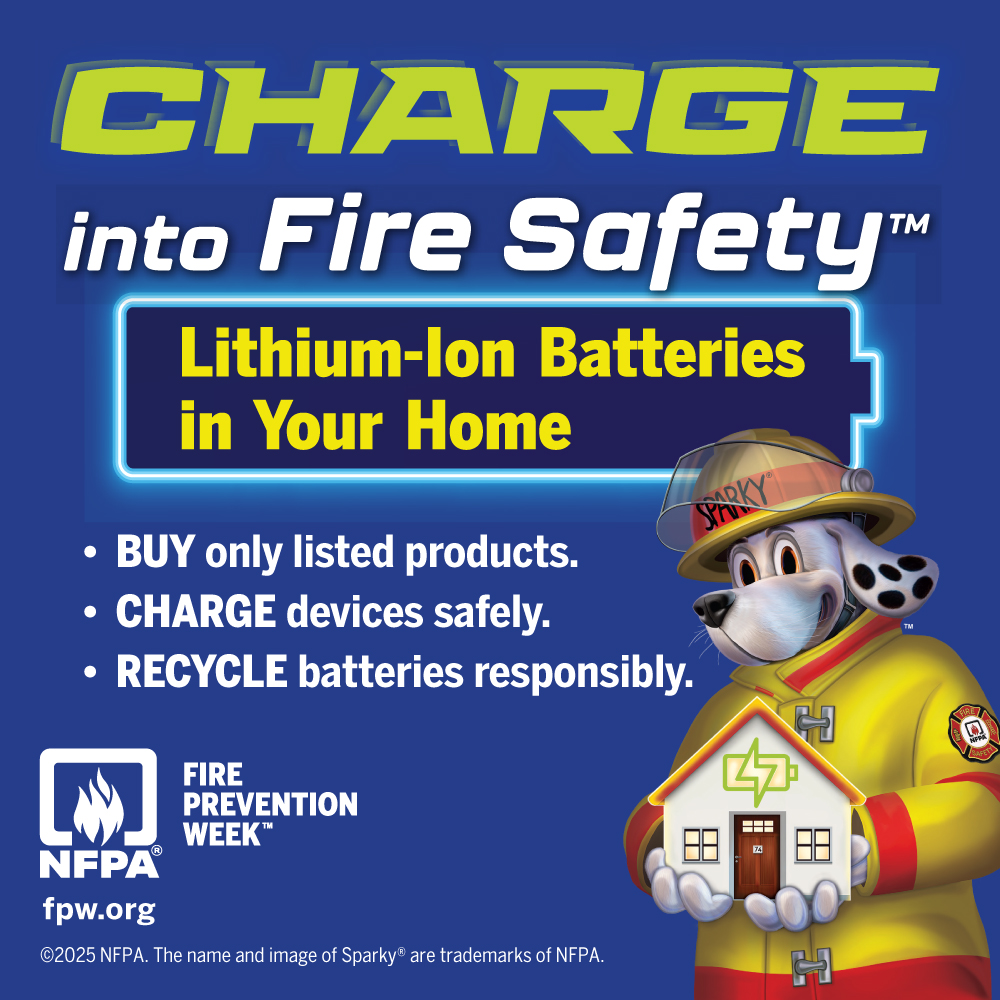
Lithium-ion batteries: Fire Prevention Week
Lithium‑ion batteries power everyday devices, but improper buying, charging, or disposal can quickly turn them into a serious fire hazard. Reduce your risk with these simple safety tips, shared as part of national Fire Prevention Week.
BUY SMART: Choose batteries and devices from reputable brands with recognized safety marks like UL, ULC, or ETL.
CHARGE SAFELY: Charge batteries on hard, well‑ventilated surfaces—never on soft furniture or bedding—and unplug them once they’re fully charged.
RECYCLE RESPONSIBLY: Don’t throw batteries or battery‑powered devices in the garbage or curbside recycling. Take them to a proper recycling depot to prevent fires and protect the environment.
Holiday safety tips
Residential fires increase during the holiday season, even though most are preventable. By following a few simple safety tips, you can help protect your home, loved ones, and neighbours and enjoy the holidays safely.
Fireworks may look harmless, but they can cause serious injuries—especially to children. Even sparklers burn at temperatures of up to 1,200°F (649°C) and are responsible for thousands of injuries each year.
In Kelowna, fireworks and firecrackers are restricted to approved events run by licensed professionals. Personal use is strictly prohibited. Know the rules by reviewing the Fire and Life Safety Bylaw No. 10760.
Caring for your tree
Live and artificial trees can pose fire risks if not cared for properly.
- When buying a live tree, check for freshness. Brown needles or needles that fall easily mean the tree is dry and a potential fire hazard.
- Place the tree near an electrical outlet to avoid long cords.
- Cut 2–5 centimetres diagonally off the trunk and secure the tree in a sturdy stand. Keep water at least 1 centimetre above the cut at all times.
- Unplug tree lights before leaving home or going to bed.
- Artificial trees should be clearly labelled fire‑retardant.
- Do not decorate metal or aluminium trees with electrical lights—they conduct electricity.
- Keep trees away from exits, heat vents, fireplaces, radiators, televisions, and other heat sources.
Disposing of Holiday Trees
- Remove live trees and take down artificial trees once the holidays are over.
- Never burn tree branches or needles in a fireplace or wood‑burning stove.
- The safest way to dispose of a live tree is recycling or chipping. Please remove all tinsel, lights, and decorations before drop‑off. The following facilities offer complimentary wood chipping services between Dec. 26 – Jan. 31:
- East Kelowna: Glenmore Landfill
- West Kelowna and surrounding area: Westside Landfill
- Lake Country: Access Swalwell Park on Bottom Wood Lake Road
- Peachland: compost site on Princeton Avenue.
- Use only non‑combustible, flame‑retardant, or flame‑resistant decorations.
- Never use candles to decorate trees.
- Keep candles away from decorations and combustible materials, and always place them in sturdy holders. Blow them out before leaving the room or going to bed.
- Use battery‑powered candles whenever possible.
- Purchase lights tested by an independent lab (such as CSA or ULC) and follow manufacturer instructions.
- Use indoor and outdoor lights in their intended settings.
- Run outdoor cords above ground to avoid contact with snow or water.
- Inspect light strings for damage and replace faulty sets.
- Use plastic clips—not nails—to hang lights safely.
- Keep decorations away from exits and exit routes.
- Space heaters need space—keep at least one metre of clearance.
- Turn off all lights and decorations before leaving home or going to bed.
- Never place furniture or rugs over electrical cords.
- Take down decorations and bring outdoor lights inside immediately after the holidays.
- Wrapping paper and packaging are highly combustible—keep them away from candles, fireplaces, lamps, and heat sources.
- Never place wrapping paper in a fireplace; it can spark or ignite creosote in the chimney.
- Ask smokers to keep smoking materials with them and away from children.
- Store matches and lighters up high and out of reach.
- After gatherings, check under cushions, furniture, and inside garbage cans for smouldering cigarette or cigar butts.
- Closely supervise anyone cooking or smoking while under the influence of alcohol.
Resources
Note: approval within one municipal jurisdiction doesn't constitute approval within another municipality.
Home fire sprinklers can make a life‑saving difference during a fire by controlling flames and reducing heat and smoke—often before firefighters arrive. They help protect people, limit property damage, and give families more time to escape safely.
Watch this video to see how fire sprinklers work and why they’re such an effective fire‑safety tool.
The Kelowna Fire Department has transformed the caretaker’s house and surrounding property at the top of Knox Mountain Park into a real‑world demonstration of how to reduce wildfire risk around a home. The site shows residents—especially those living in wildland or urban‑interface areas—what practical FireSmart™ principles look like on the ground.
Visitors can walk the property to see how trees, shrubs, and vegetation are managed across the three FireSmart™ priority zones. An on‑site interpretive sign highlights key actions homeowners can take to lower the chance of wildfire spreading to their home.
Priority Zone 1: 0–10 metres from buildings
- Shrubs, most trees, and deadfall are removed.
- Trees that remain have been pruned at least two meters up from the ground and do not overhang the roof.
- Grass is watered and mowed.
Priority Zone 2: 10–30 metres from buildings
- Trees pruned and thinned around all buildings/structures on the property.
Priority Zone 3: 30–100 metres and beyond
- Trees in the park have been thinned and ladder fuels removed.
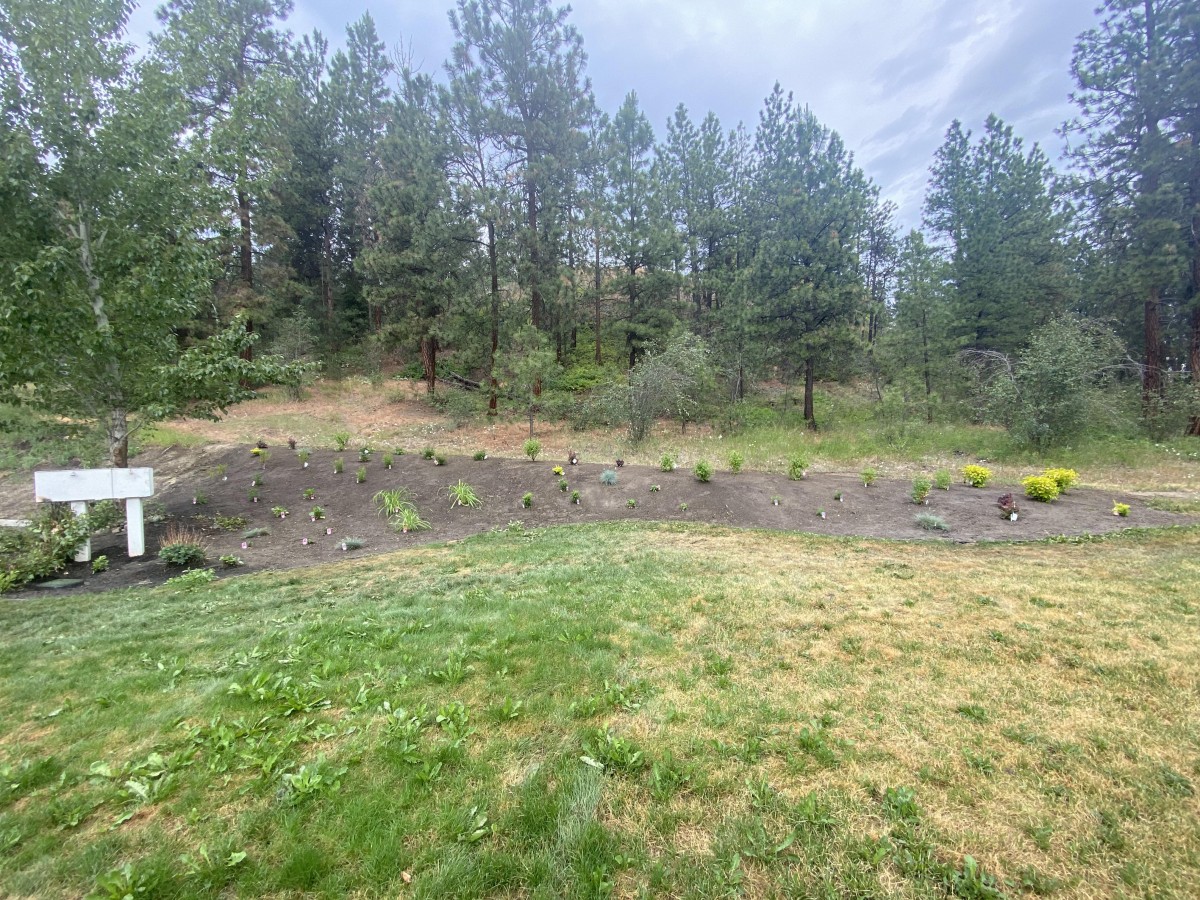
The FireSmart demonstration garden was installed in 2021 to highlight FireSmart-approved landscaping choices that are suitable for our local climate. Previously the area was landscaped with juniper shrub which has now been replaced with more suitable landscaping choices.
In addition, the gazebo roof, formerly made of cedar shake, was replaced with asphalt in accordance with FireSmart best practices.
Visit the garden any time at the corner of Dilworth Drive and Summit Drive to learn more and get inspired.
Watch a FireSmart home evaluation in action.
Have a commercial building? Watch the Outdoor Fire Prevention video for key fire‑safety tips.
Be prepared before emergencies strike. These FireSmart and Central Okanagan Emergency Management resources help you, your family, and your neighbourhood respond fast.
- FireSmart BC Homeowner’s Manual
- FireSmart BC Landscaping Guide
- FireSmart BC factsheets
- FireSmart BC magazine
- FireSmart podcast on Apple or Spotify
- FireSmart Emergency Wildfire Preparedness Checklist
- FireSmart BC research page: science behind the program
- FireSmart Neighbourhood Recognition Program
- Be prepared - Regional District of Central Okanagan
- Wildfire Service - Province of British Columbia
- PreparedBC emergency guides and resources - Province of British Columbia